
How to Handle Dietary Restrictions When Cooking for 80+ People
You get the registration forms back. You were hoping for a simple headcount. What you got is sixty-two names, a peanut allergy, three celiacs, two vegans, one shellfish allergy, a vegetarian who eats dairy, two low-sodium dads, and one kid whose mom wrote "please no red food dye" in the comment box.
You're the meal coordinator. Or you're the youth pastor who has to plan the meals on top of running the retreat. Or you're the family reunion planner. Somebody has to figure out how to feed sixty to eighty people, three times a day, across a four-day retreat, without sending anyone to the emergency room.
Dietary restrictions are where group meal planning falls apart. Most venues make it worse. Restaurants push a one-size-fits-all menu. Vacation rentals have one home kitchen that can't separate prep areas. Catering companies charge extra for every modification and still get it wrong.
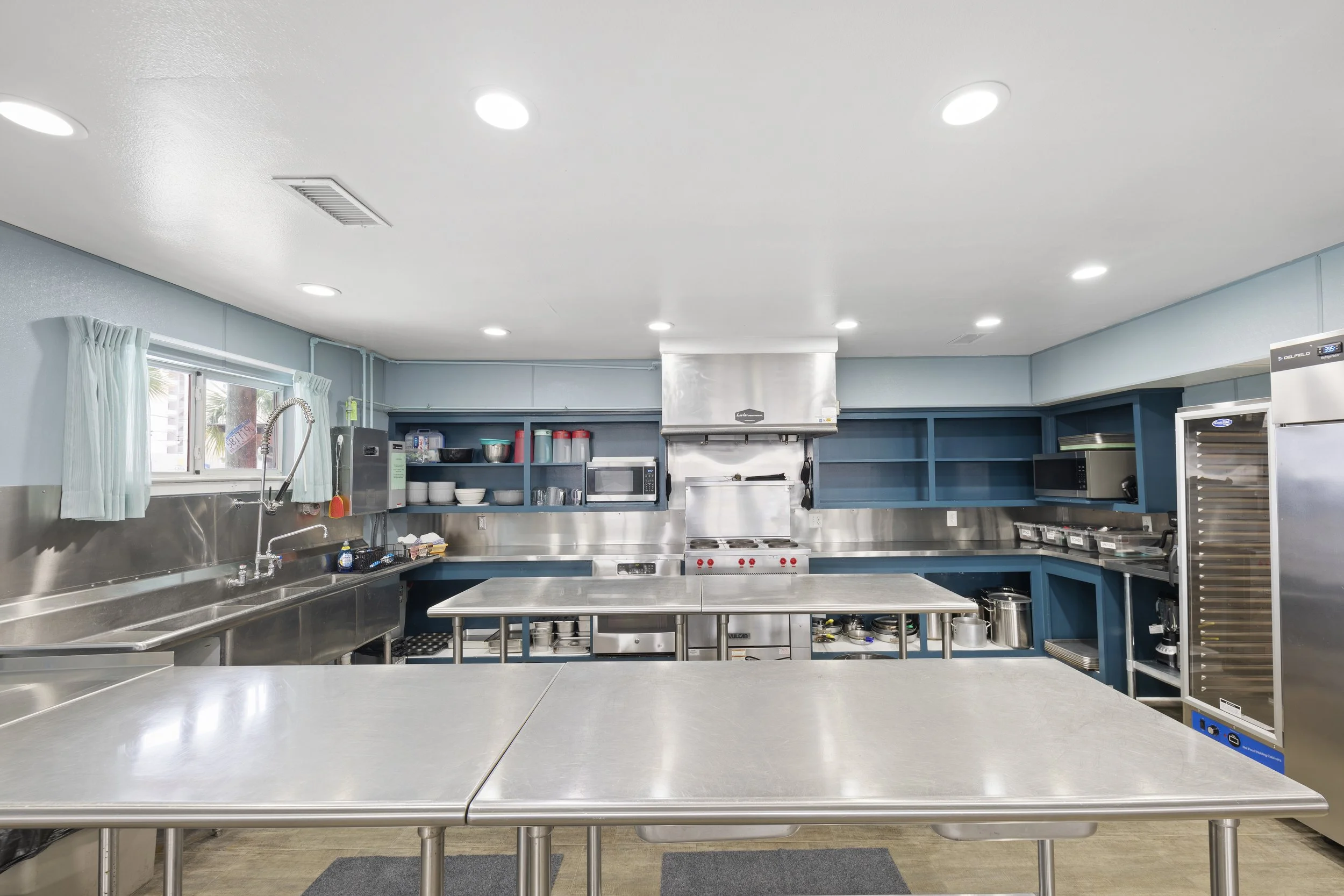
Our retreat is set up for this kind of meal planning. We have two fully-equipped commercial kitchens, commercial refrigeration that can separate allergen ingredients, and enough equipment to prep three variations of the same meal at the same time.
Here's how to plan a weekend of meals that feeds everyone on the roster, safely.
Why Our Retreat Makes Dietary Planning Easier
When your group books with us, you have exclusive use of our full commercial kitchen for the whole weekend. That setup quietly solves most of the problems group meal coordinators face.
If you rent the entire facility, you’ll have two separate kitchens to physically separate allergen prep from the main meal line
Commercial refrigerators give you enough cold storage to label and isolate allergen-specific ingredients
Multiple cutting boards, knives, and prep surfaces let you designate allergen-only tools
Large-capacity cookware allows parallel cooking: the main entree and the vegetarian option in the same time window
Your own dedicated space, without another group's cross-contamination risk
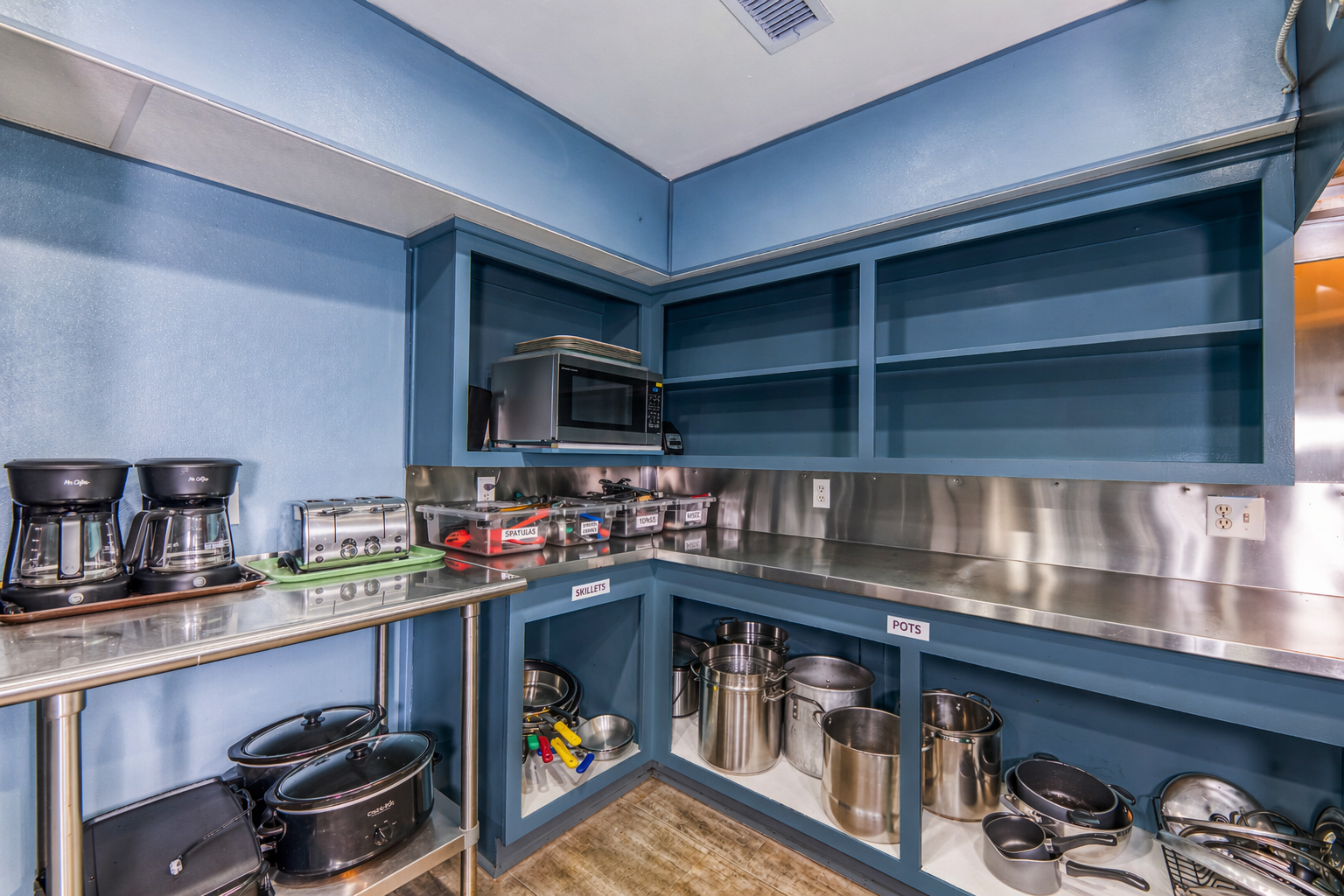
What's on-site in each fully-equipped commercial kitchen:
Vulcan commercial stoves and ovens, plus a second standard oven for parallel cooking
Two Delfield commercial refrigerators and a dedicated commercial freezer
24-quart stock pots, 28-quart roaster pans, and a variety of skillets
Multiple cutting boards, commercial knives, and large mixing bowls
Two charcoal grills for outdoor cooking or separating vegetarian and meat grilling
Plan the Menu Around the Hardest Restriction
The easiest way to cook for a group with mixed dietary needs is to work backwards from the hardest restriction. If you have a celiac on the roster, every meal starts gluten-free by default. If you have a peanut allergy, the kitchen is peanut-free for the weekend. If you have a strict-kosher or strict-halal participant, you plan around their requirements and the rest of the group adjusts.
“Working from the hardest restriction outward keeps the whole group eating together.”
Working from the hardest restriction outward keeps the whole group eating together. Build the base menu so everyone's eating the same core meal, with small additions for people whose diets allow more.
For Food Allergies
The top-tier food allergens (peanuts, tree nuts, dairy, eggs, wheat, soy, fish, shellfish, sesame) can be life-threatening. A participant with a severe allergy needs confidence that the kitchen is handling their food safely, and that takes more than ingredient swaps.
Get a clear allergy list in the registration form, including severity and what they carry (EpiPen, inhaler, antihistamine)
Assign one meal team member as the allergen lead for the weekend
Use a dedicated cutting board, knife, pan, and serving utensil for any allergen-free prep
Label allergen ingredients clearly in the fridge
Wash hands and surfaces thoroughly between allergen prep and regular prep
If you’ve reserved our entire resort, you can use one of the two kitchens as a designated allergen-safe space if a severe allergy is in the group
Communicate with the allergic participant directly. They know their allergy better than you do.
For Vegetarians and Vegans
Vegetarians and vegans are your easiest dietary accommodation once the menu is set up around them.
Plan a vegetarian base for every meal (bean chili, pasta with vegetables, grain bowls, vegetable tacos)
Keep the base vegetarian and add meat as an optional topping
For vegans, skip cheese, butter, and eggs in the core recipe; offer those as toppings for everyone else
Grill vegetables on their own grill rather than the one used for meat
Make the vegetarian and vegan options generous and delicious. A half-size plate of plain steamed vegetables next to a full meat meal reads as an afterthought.
For Religious Dietary Requirements
Religious dietary rules deserve the same seriousness as allergies. Participants are going to hold their beliefs regardless of what the meal team planned, and the coordinator's job is to make that easy.
Common restrictions to plan around:
Kosher: no pork or shellfish; meat and dairy can't be prepared or served together; strict kosher requires certified ingredients
Halal: no pork, alcohol, or certain animal byproducts; halal meat requires specific slaughter
Hindu: many Hindus are vegetarian, and some avoid onions and garlic
Mormon/Latter-Day Saints: no coffee, tea, or alcohol
Seventh-day Adventist: often vegetarian, with no caffeine
Fasting traditions (Orthodox Christian fasting seasons, Ramadan): time-specific restrictions that shift meal timing, not just ingredients
“Share the weekend menu in advance so participants can flag anything the plan missed.”
Ask participants directly in registration. For strict kosher or halal, plan to source specific ingredients separately. Share the weekend menu in advance so participants can flag anything the plan missed.
For Medical Dietary Needs
Diabetes, high blood pressure, food sensitivities, and other medical conditions need accommodation too, even when they don't come with a formal allergy card.
Offer sugar-free and low-sodium options at every meal
Label ingredients clearly in buffet-style service
Keep protein and complex carbs available at snack times for participants managing blood sugar
Stock herbal and caffeine-free options at coffee service
Set Up the Meal Team for Success
Cooking for a group with diverse dietary needs is a team sport. The single volunteer trying to do it alone burns out by Saturday night.
Assign specific meal shifts, like a breakfast team, lunch team, dinner team, and a snack team
Have one person on each meal specifically responsible for the allergen-safe plate
Print the menu with allergens clearly marked and post it in the dining area
Use name labels or color-coded plates for severe-allergy participants so meal team members can double-check
Have a backup plan that includes emergency snacks, frozen meals, or a grocery run option if something slips
Communicate With Participants Early
Most dietary mistakes happen because somebody didn't mention their restriction until they arrived at the retreat. Get ahead of that.
Include dietary questions in the registration form with specific options and a free-text box
Follow up with every participant who flags a restriction, one-on-one, at least two weeks before the trip
Publish the menu two weeks out so participants can flag anything the plan missed
Remind participants to bring backup snacks in case something still slips through
Set honest expectations about what the kitchen can and can't do
Feeding Your Group Is Part of the Ministry
“The dietary restrictions on the registration form are the details that let everyone stay at the table.”
A group retreat where everyone eats together matters. The table is where stories come out, where the shy kid gets invited into conversation, where the meal team that prepped it together discovers something about each other. When the food works, the ministry works.
The dietary restrictions on the registration form are the details that let everyone stay at the table.
Ready to Plan Meals Your Whole Group Can Eat?
Feeding a group with real dietary needs works best in a kitchen built for group meals. Our two fully-equipped commercial kitchens, parallel cooking capacity, and dedicated cold storage are set up for the kind of menu planning this takes.
Contact our retreat specialists today, and let's walk through how your group's kitchen setup can handle every dietary need on the roster.