
Scout Retreat Planning: Coastal Adventures That Build Character
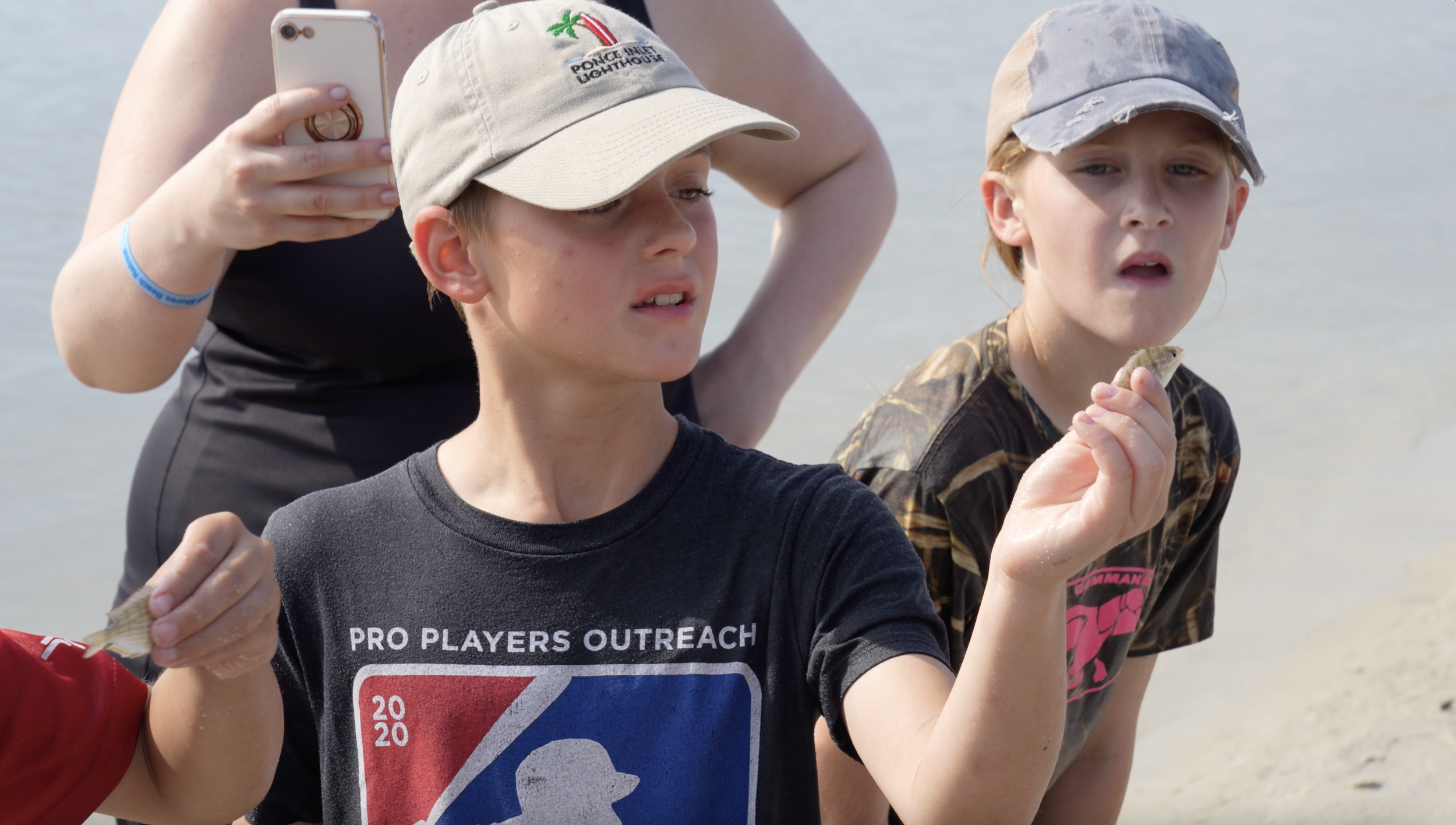
If you're a Scouting America (formerly Boy Scouts of America) troop leader looking for a retreat that goes beyond the usual campground, the Gulf Coast should be on your radar.
The Gulf of Mexico becomes your troop's classroom. The beach becomes their laboratory. And the shared experience of exploring, cooking, and problem-solving together in a new environment builds the kind of character that no meeting hall can replicate.
At Gulf Shores Beach Retreat, we've hosted scout troops of all sizes, and we've seen firsthand what a few days on the coast can do for a troop. Here's how to plan a retreat that delivers real adventure, meaningful progress toward merit badges, and the group bonding your scouts will talk about long after they get home.
Why the Gulf Coast Works for Scout Troops
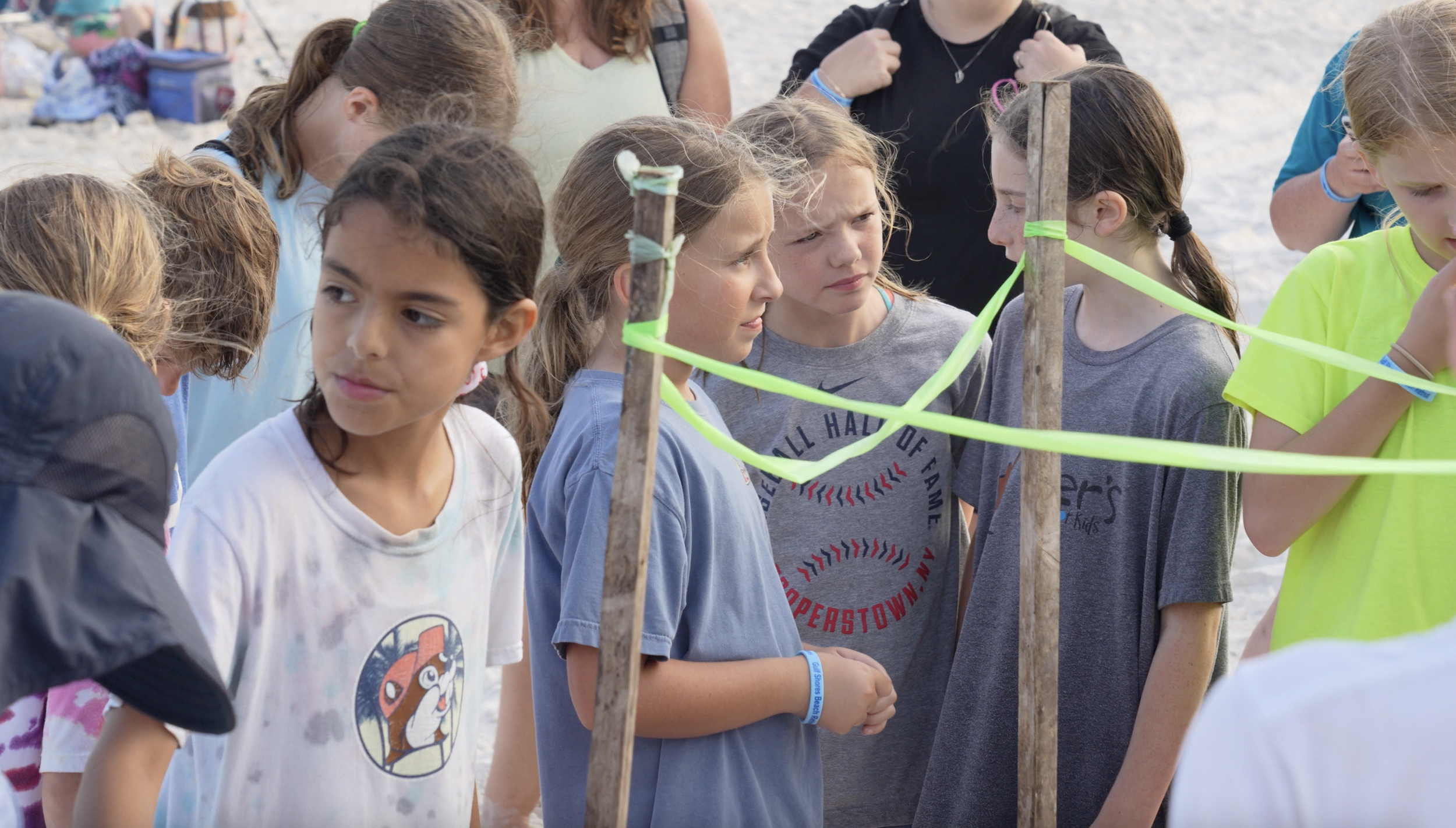
Most troop leaders have access to wooded campsites and lake retreats. A coastal trip offers something different: an entirely new set of ecosystems, challenges, and learning opportunities that push scouts out of their comfort zone in the best way.
Alabama's Gulf Coast gives your troop access to beaches, salt marshes, tidal zones, barrier islands, freshwater lakes, and maritime forests, all within a short drive of each other. That kind of environmental diversity means your scouts encounter habitats and wildlife they've never seen before, which is exactly the kind of experience that sparks curiosity and builds confidence.
“Scouts navigate new terrain, work in teams to solve real problems, and take responsibility for each other in an unfamiliar environment.”
It's also a setting where leadership happens naturally. Scouts navigate new terrain, work in teams to solve real problems, and take responsibility for each other in an unfamiliar environment. Those moments matter more than any planned exercise.
Merit Badge Opportunities on the Gulf Coast
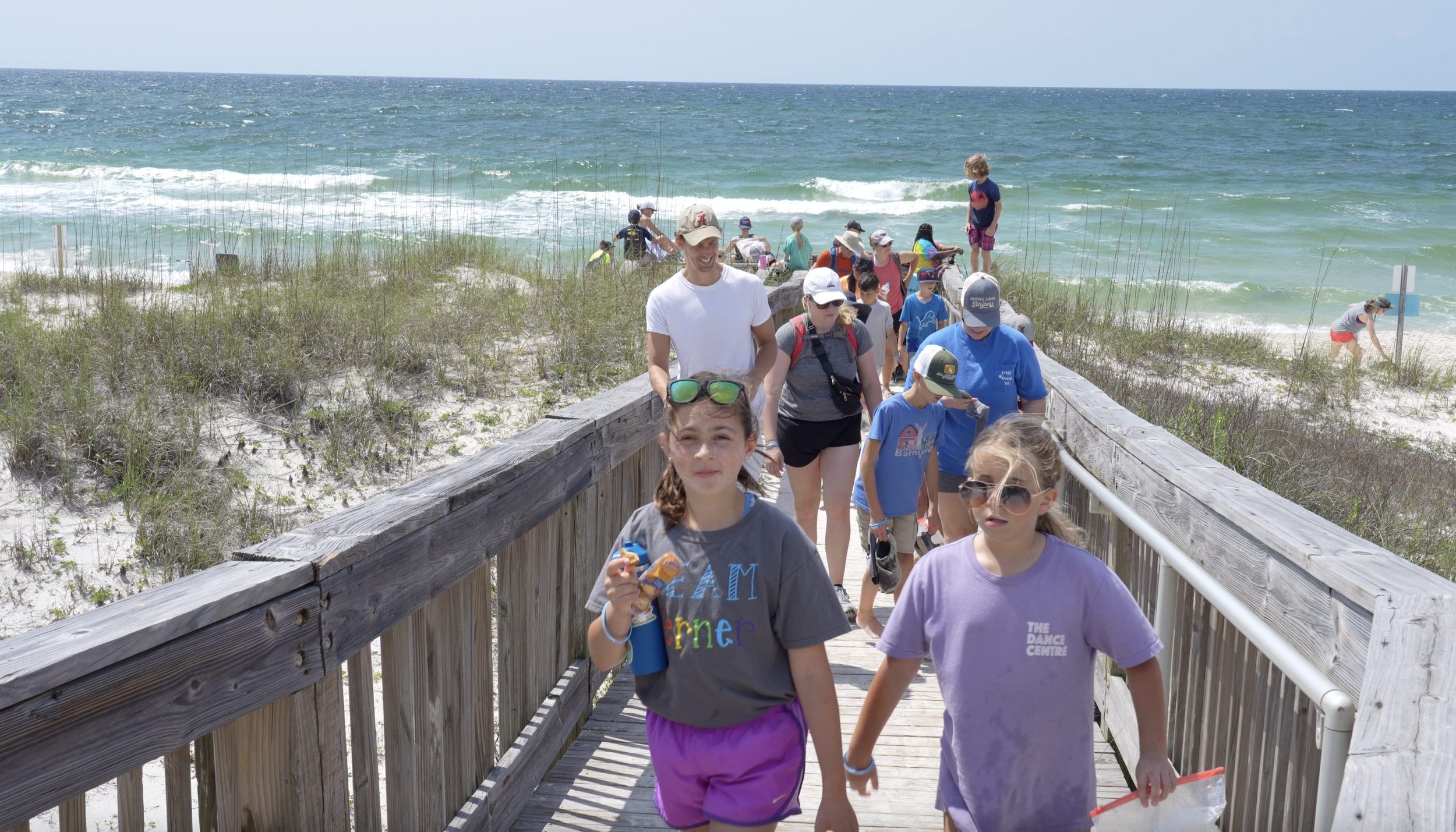
One of the best parts of planning a coastal scout retreat is how many merit badge requirements the setting naturally supports. The Gulf Coast environment gives scouts access to experiences that are difficult or impossible to find at home, especially for troops based inland.
A note on how badge work fits in:merit badges are signed off by approved counselors through your local Scouting America council, not by retreat facilities or outside programs. We recommend coordinating with your council before your trip to line up counselors for the badges your troop plans to work on. What we provide is the setting, the facilities, and the coastal access that make hands-on badge work possible.
Oceanography
The Gulf Coast is a natural fit for the Oceanography Merit Badge. With the ocean steps from your door, scouts can observe tidal patterns firsthand, study wave action and coastal erosion, and model sediment movement in a real beach environment.
Several of the badge's hands-on requirements are specifically designed for coastal settings. Tracking formations like berms and low-tide terraces, building and towing a plankton net, and observing how groins and jetties affect wave patterns all become tangible exercises rather than abstract concepts when your troop is standing on the shoreline.
The trip can also provide material for the badge's reporting requirements, where scouts write about a visit to a marine laboratory, aquarium, or coastal research site.
Environmental Science
This Eagle-required badge asks scouts to observe ecosystems, conduct field studies, and investigate environmental issues. The Gulf Coast's diversity of habitats makes it an ideal setting for this work.
Your troop can compare dune, marsh, forest, and shoreline ecosystems within a single trip, giving scouts a richer understanding of how different environments interact. The Environmental Science Merit Badge also includes requirements around pollution, endangered species, and conservation. All of these connect directly to Gulf Coast issues like coastal erosion, sea turtle nesting, and wetland preservation.
Nature
With access to coastal birds, marine life, reptiles, and plant species that differ significantly from inland environments, the Gulf Coast gives scouts a strong setting for the Nature Merit Badge.
Scouts can work on field identification requirements across multiple categories, including birds, invertebrates, and plants, that would be hard to progress on at a typical campsite. The badge's emphasis on food chains, ecosystems, and the relationship between plants and animals takes on new meaning when your troop is observing pelicans diving for fish, ghost crabs burrowing in the sand, and sea oats stabilizing the dunes.
Other Badges Worth Considering
Depending on your troop's interests and the excursions you plan, a Gulf Coast retreat can also provide a strong environment for working toward:
Weather: Observing Gulf Coast weather patterns, cloud formations, and storm systems in a subtropical coastal climate
Bird Study: The coast is a major flyway with species diversity that inland sites can't match
Fish and Wildlife Management: Gulf Coast ecosystems offer real-world context for habitat management and conservation discussions
Reptile and Amphibian Study: Coastal reptiles, including sea turtles during nesting season, provide unique observation opportunities
Structured Programming at Gulf State Park
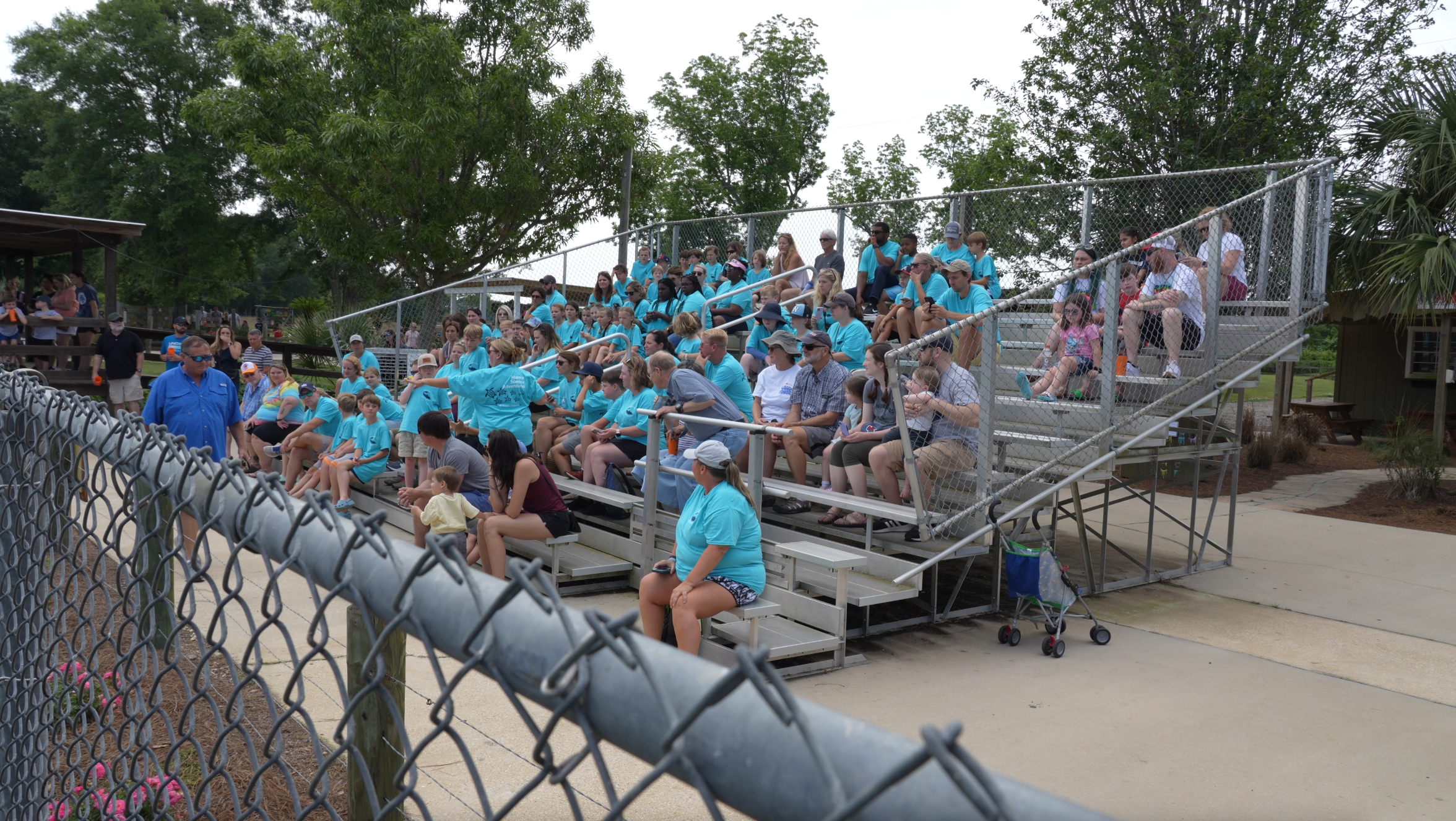
For troop leaders who want hands-on educational programming led by trained naturalists, the Learning Campus at Gulf State Park is a short drive from our retreat and explicitly serves scout troops.
The Learning Campus sits within Gulf State Park's 6,150 acres, which include nine distinct ecosystems. Their field naturalists lead programs aligned with Alabama State Standards and Next Generation Science Standards, and they regularly work with scout groups to build itineraries that support outdoor learning goals.
Programs include guided hikes through beach, marsh, and forest habitats, wildlife observation, and hands-on environmental science activities. The park also has an Interpretive Center, Nature Center, and a fishing pier that stretches a quarter mile into the Gulf.
The Learning Campus can help you coordinate programming that complements your troop's badge goals. Contact them at (251) 923-3101 or info@learningcampusgsp.com to start planning.
Your troop stays with us at Gulf Shores Beach Retreat and visits the Learning Campus for daytime programming, giving you the best of both: structured learning during the day and exclusive, comfortable group lodging at night.
Character Building That Actually Happens
A coastal retreat creates moments of real growth constantly. Scouts who have never seen the ocean wade into the surf together. A patrol that struggled with teamwork back home figures it out while cooking dinner for the whole troop. A quiet scout spots a dolphin pod from the boardwalk and suddenly becomes the group's most enthusiastic naturalist.
“Phones become less interesting, conversations get more real, and the bonds your scouts form during those few days carry forward into every meeting and campout for the rest of the year.”
When your troop is together in one exclusive space, eating together, playing together, exploring together, the walls come down. Phones become less interesting, conversations get more real, and the bonds your scouts form during those few days carry forward into every meeting and campout for the rest of the year.
Why Troop Leaders Choose Gulf Shores Beach Retreat
Planning a troop trip comes with a specific set of challenges. You need a facility that keeps your entire group together, gives you control over the environment, and supports the way scouting actually works. Here's what we offer:
Exclusive access and safety. Your troop gets one entire side of our facility. No strangers in your hallways, no shared spaces with other groups, and no one around your scouts that you haven't accounted for. For leaders and parents, that level of control makes a real difference.
Bunk-style accommodations for up to 160 guests. Everyone sleeps in the same space, eats in the same kitchen, and gathers in the same meeting areas. That's how troops are supposed to operate, and our layout supports it. Each side of our facility accommodates up to 80 guests, so even large troops or multi-troop trips work well.
A fully equipped commercial kitchen. Patrol meal teams can rotate through breakfast, lunch, and dinner, turning every meal into a leadership and teamwork exercise. Our kitchen includes commercial-grade ovens, refrigerators, freezers, stock pots, grills, and enough serving equipment for large groups. Troops regularly feed 80+ people for a fraction of what restaurant dining would cost.
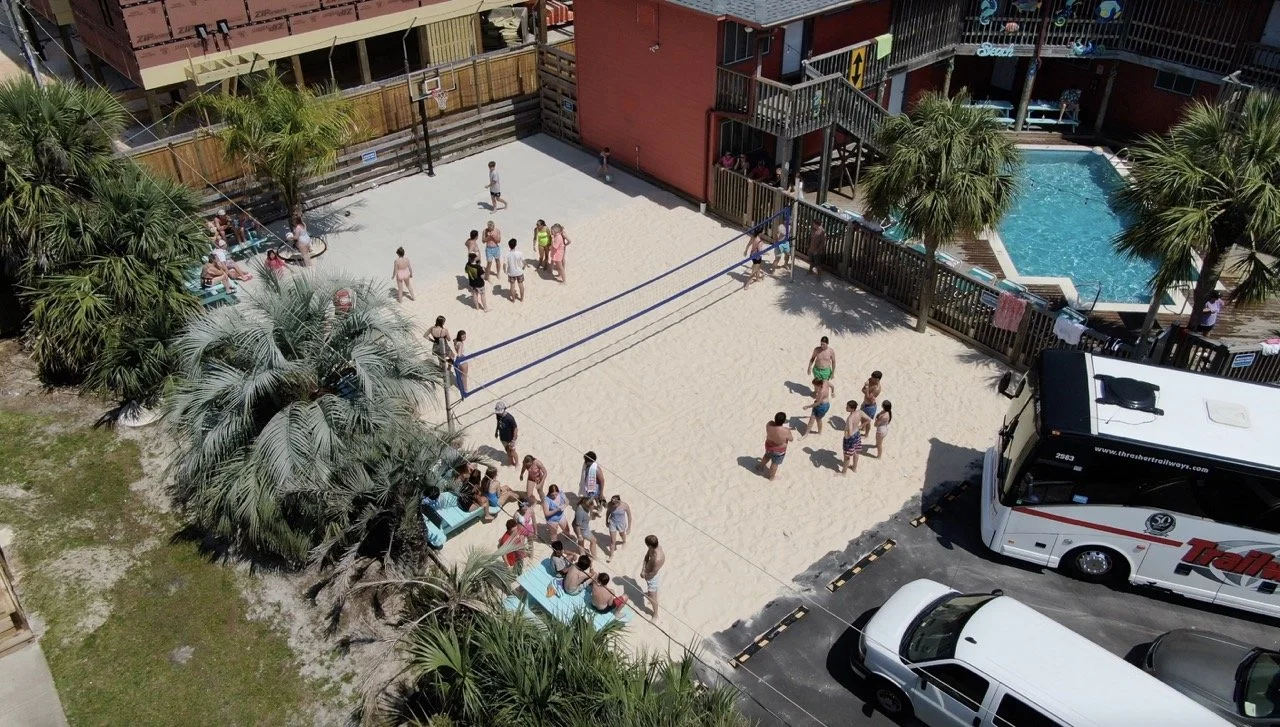
On-site meeting spaces and recreation. Hold your troop meetings, Scoutmaster conferences, and evening programs in dedicated indoor spaces designed for groups. When it's time to blow off steam, sand volleyball, basketball, the private pool, and direct beach access are all steps away.
A location that supports your programming. We're directly across from the Gulf of Mexico, with beach access through our dedicated boardwalk. Gulf State Park and its Learning Campus, Bon Secour National Wildlife Refuge, Fort Morgan, and the Alabama Gulf Coast Zoo are all a short drive away.
Planning Your Troop's Coastal Retreat
A few practical tips from the troops that have done this well:
Build your itinerary around merit badge goals. Decide which badges your troop will work toward before the trip, then plan activities and excursions that support those requirements. Coordinate with your local council on merit badge counselors so your scouts can get credit for the work they do on the coast.
Assign patrol responsibilities. Give each patrol ownership of a meal, a cleanup rotation, or a group activity. This is scouting in practice, not just theory. Our commercial kitchen and on-site facilities make it easy to divide and delegate.
Connect with the Learning Campus at Gulf State Park. If you want structured programming led by trained naturalists, reach out to the Learning Campus during your planning phase. They regularly work with scout troops and can help you build a daytime itinerary that complements your troop's goals.
Leave room for free time. The unstructured moments matter. Beach exploration, pool time, and pickup volleyball games are where some of the best memories and character growth happen.
Book early for spring and fall. These are our most popular seasons for scout groups. Spring offers warming weather, sea turtle nesting season, and migratory bird activity. Fall brings comfortable temperatures and smaller crowds. Both seasons are ideal for outdoor programming.
Ready to Plan Your Troop's Coastal Adventure?
We've been hosting scout troops at Gulf Shores Beach Retreat for years, and our team knows how to help troop leaders feel confident about every detail.
For structured educational programming, contact the Learning Campus at Gulf State Park at (251) 923-3101 to build a daytime itinerary for your troop.
For exclusive group lodging, contact our retreat specialists. We'll help you plan a retreat where your scouts make progress on badges, build character, and come home closer than they left.