
Team Meal Planning Made Easy: What Groups Actually Cook at Gulf Shores Beach Retreat
If you're reading this, there's a good chance you're the person who raised your hand once and somehow became the official meal coordinator for your team's trip to Gulf Shores. You've got a group of hungry kids, three meals a day, a game schedule that starts at 7 a.m., at least two picky eaters, one kid with a dairy allergy, and a budget that doesn't stretch to restaurant prices for a week.
We see you. And we've got some good news.
After hosting hundreds of groups who utilize our commercial kitchens, we've watched the most organized teams turn group cooking from a logistical headache into one of the best parts of the trip. All it takes is a simple plan and a kitchen that can handle the volume.
And we’re sharing the whole playbook with you so you can have the same meal planning success.
Why the Best Groups Cook Together (And Why It's Easier Than You Think)

“And here’s the thing coaches mention to us over and over: groups that cook together interact differently than groups that eat at restaurants. Something happens around a prep station and a big pot of sauce that doesn’t happen when everyone’s staring at a menu.”
Let's address the objection that's probably sitting in the back of your mind: Cooking for 30+ kids sounds way harder than just going to a restaurant.
Here's what actually happens at a restaurant with a group that size. You wait 20 minutes to be seated. Someone's order is wrong. Three kids want to split an entrée. The check takes forever to sort out. By the time everyone's back on the bus, 90 minutes have evaporated — and that's 90 minutes that could have been spent at the pool, on the beach, or actually getting some rest before tomorrow's games.
Cooking at our retreat looks completely different.
A rotation of parent volunteers handles the meal. Everyone eats together in the dining hall. The whole thing — cooking, eating, and cleanup — is wrapped up in the time it would've taken just to get seated at a beachside restaurant in peak season.
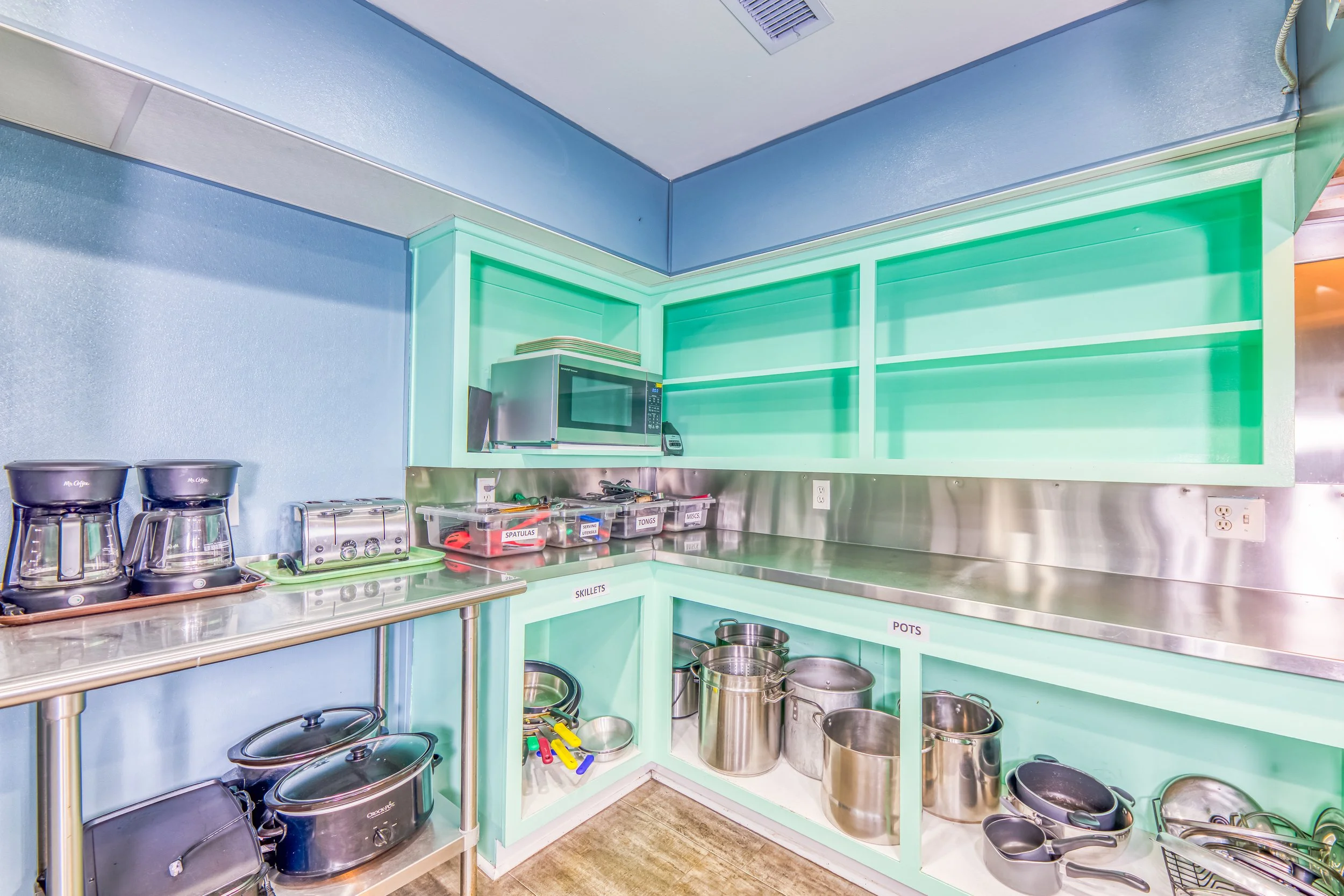
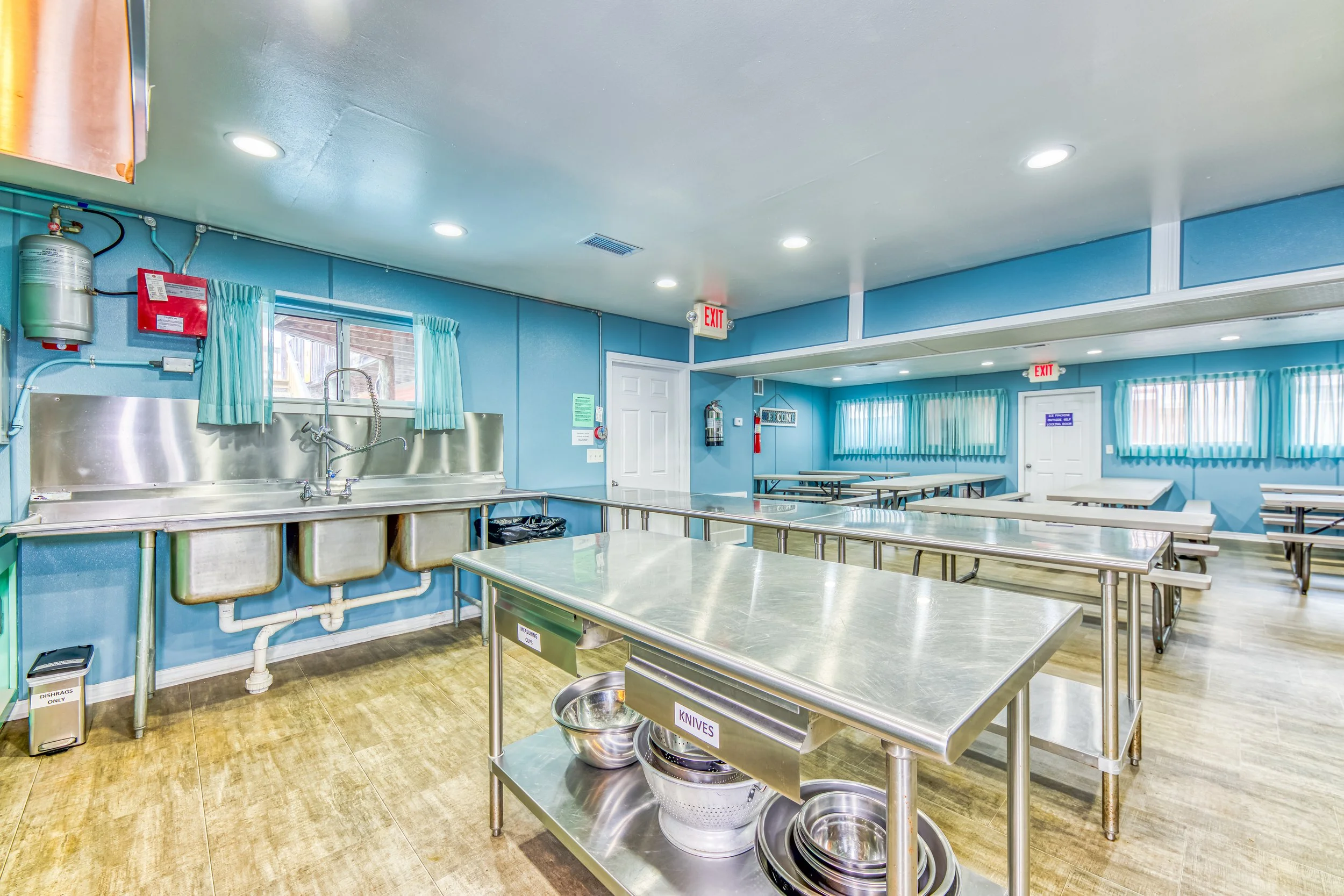
Our kitchens are fully equipped for group cooking: commercial stoves, large stock pots, commercial ovens that handle volume, electric skillets and griddles, and everything else you'd need to feed a crowd efficiently. (You can see the full equipment list on our Commercial Kitchen Inventory page — we won't repeat it all here.) The point is, you're not improvising with a hotplate. You're working in a real kitchen built for exactly this.
And here's the thing coaches mention to us over and over: groups that cook together interact differently than groups that eat at restaurants. Something happens around a prep station and a big pot of sauce that doesn't happen when everyone's staring at a menu.
Most-Loved Group Meals
This isn't a list of theoretically good ideas. These are the meals we've actually watched hundreds of groups pull off successfully in our kitchens — including the top food nights from groups who come back year after year.
Easy Crowd-Pleasers
Taco Night consistently ranks as one of the most popular meals groups cook at the retreat, and it's not hard to see why.
Tacos are endlessly customizable, which means picky eaters and kids with dietary restrictions can build their own plate without anyone making a big deal of it. Set up a taco bar with stations for proteins, toppings, salsas, and let kids move assembly-line style.
It's affordable in bulk, requires minimal cooking skill, and cleanup is fast. For a group that's tired after a long day of games, taco night almost runs itself.
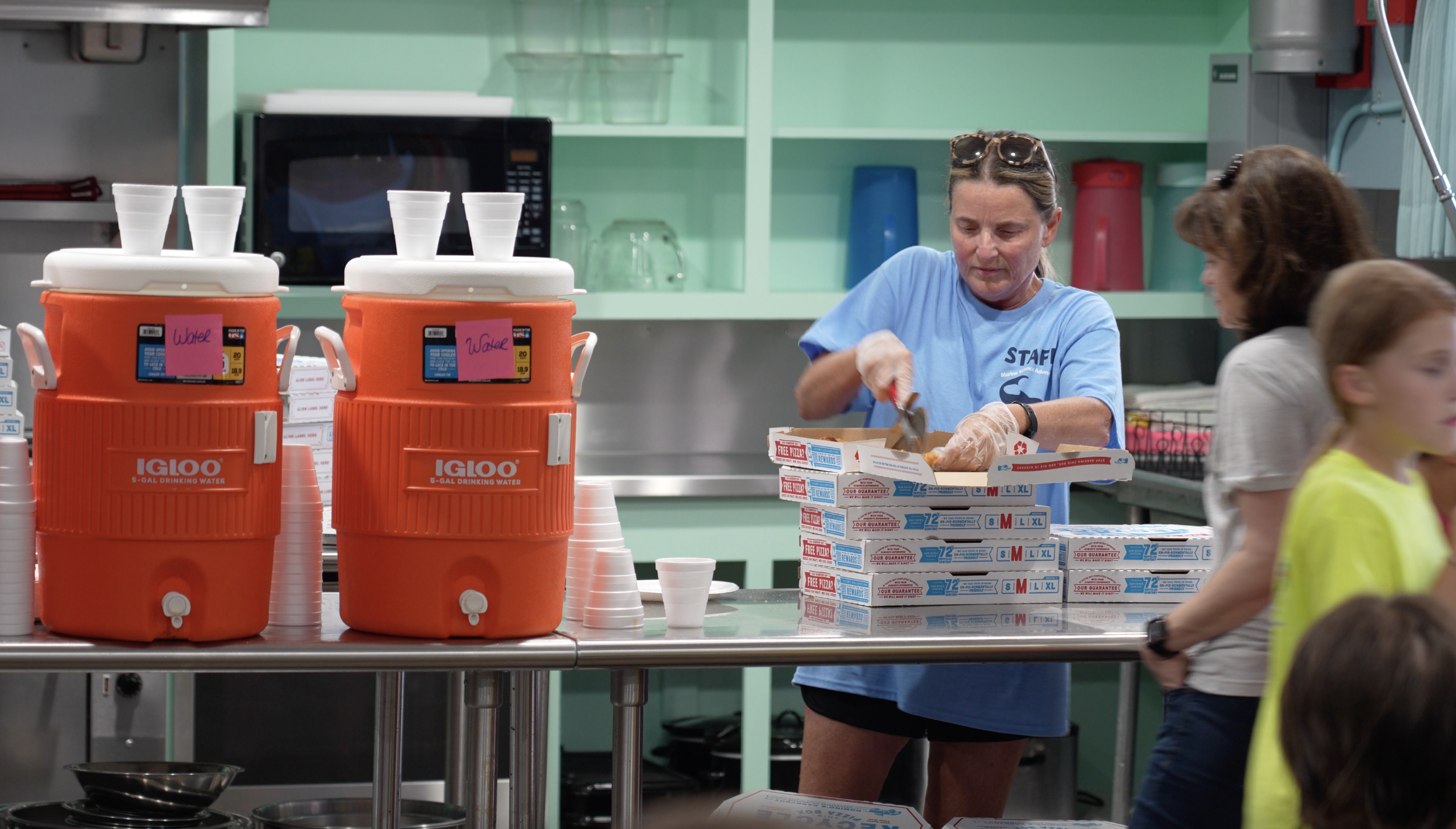
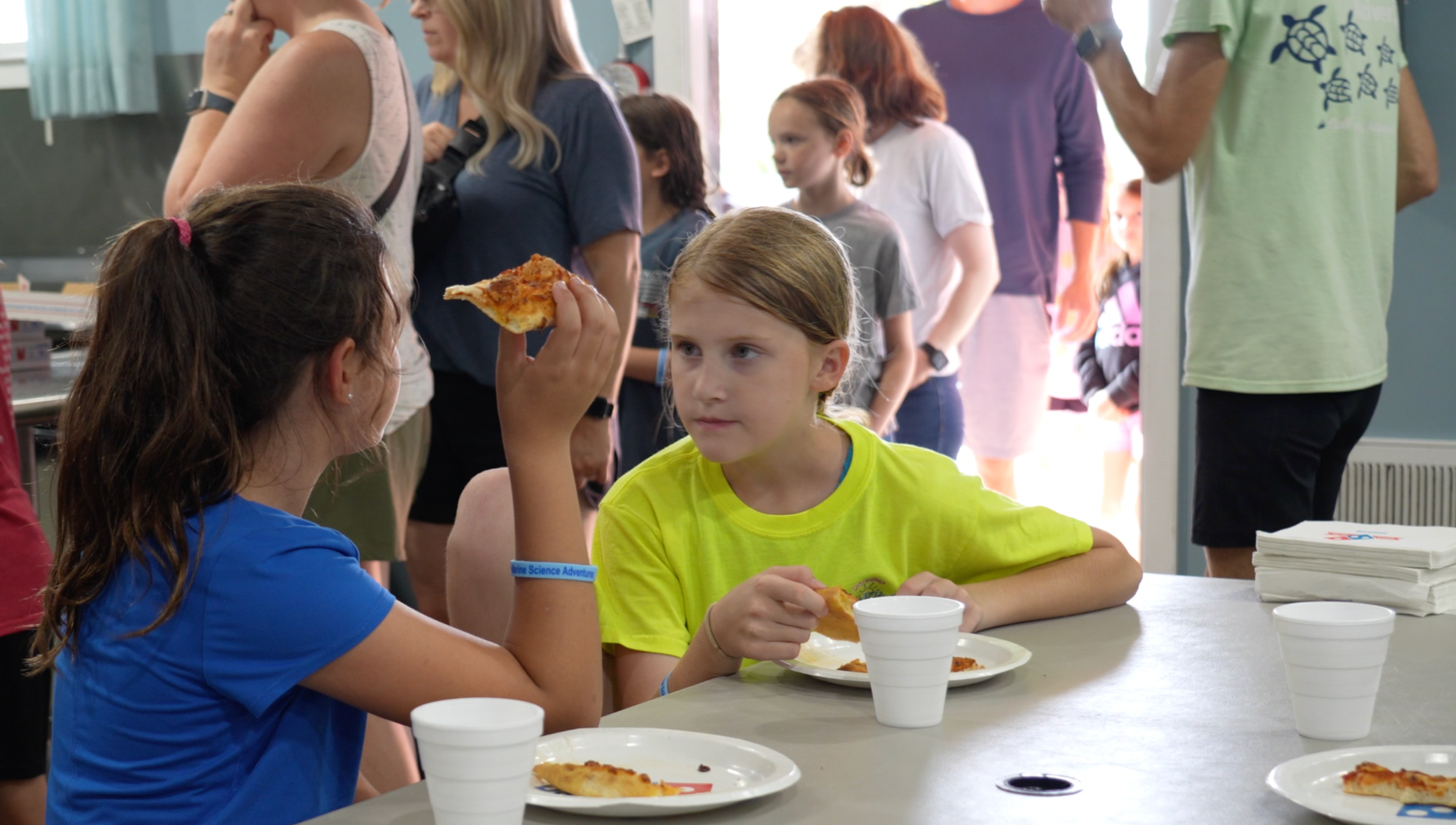
Pizza Night is another perennial favorite. You can buy ready-made dough or prep it earlier in the day, and our commercial ovens can handle multiple pans at once, so you're not waiting around for one pizza at a time.
Letting kids top their own pizzas turns dinner into an activity — one of those spontaneous group moments that ends up in the highlight reel of the trip.
Burgers and Hotdogs work especially well because we have charcoal grills on-site, which means you're keeping kids outside and active while food cooks. Assign a grill team and it stops feeling like a chore and starts feeling like a cookout.
For groups that want to make it a whole evening, pair it with the sand volleyball court and let kids rotate between grilling duty and the game.
Feeds-a-Crowd Favorites
Spaghetti Night is probably the most cost-effective meal on this list. Our big stock pots were made for large batches of pasta, and a complete meal of spaghetti, sauce, garlic bread, and salad comes in at a very low per-person cost.
One trick from experienced groups: make the sauce at home before the trip, freeze it, and reheat it on-site. It cuts the cooking time down significantly and the sauce is usually better for it.
Lasagna is a slightly more involved meal that pays off big. The real advantage is that it can be assembled completely ahead of time (either the night before or at home before the trip) and simply baked on arrival.
With multiple pans running in the commercial ovens simultaneously, you can feed the whole group in one oven run. Smart groups make two versions: one standard and one vegetarian, which covers most dietary needs without anyone feeling singled out.
Breakfast That Gets Everyone Out the Door
A pancake and egg station is the go-to for groups that have time for a real morning meal. Assign a crew of two or three adults, use the electric skillets and griddles for volume, and you've got a hot, filling breakfast that doesn't require much cleanup. Kids who eat a real breakfast play better. That's not just science, it’s what we’ve seen happen over and over.
For tournament mornings with an early departure, experienced groups bake muffins or banana bread the night before, set out fruit and granola bars, and fill the 5-gallon coolers with water and sports drinks the night before so they're cold and ready by morning. In Gulf Shores heat, keeping everyone hydrated from the first meal of the day matters more than people expect.
How the Organized Groups Handle Meal Logistics
Before the Trip
The single most important thing is designating one meal coordinator, usually a team parent who's organized by nature and willing to delegate. This person doesn't have to cook everything. They just own the plan and hand pieces of it off to others.
From there, build a simple meal schedule that's mapped against your game and activity schedule. Some meals will need to be fast (post-game dinners, early departure breakfasts); others can be more relaxed. Knowing which is which before you arrive lets you plan accordingly rather than improvising under pressure.
For groceries, the two most common approaches are dividing a shared shopping list among families who each bring assigned items, or collecting a food fund from the group and doing one bulk shopping trip after arrival.
“There are grocery stores conveniently located near our retreat, so a post-arrival run is easy.”
There are grocery stores conveniently located near our retreat, so a post-arrival run is easy. Whichever approach you choose, collect allergy and dietary information from every player before you finalize the menu and plan at least one alternative per meal so no one's eating plain bread while everyone else has tacos.
On-Site
The teams that don't burn out their volunteers rotate cooking assignments: three or four parents or players per meal shift, so no single person is stuck in the kitchen for the entire trip. Post the rotation schedule somewhere visible on day one so everyone knows when their shift is.
Prep as much as possible the night before. Chop vegetables, marinate meat, assemble lasagna pans, bake muffins, fill water coolers. Ten minutes of prep the night before can shave 30 minutes off the morning rush when everyone's already behind schedule.
“Set up meals buffet-style or as stations whenever possible. For large groups, this is significantly faster than plating individual meals and eliminates the bottleneck of everyone waiting on everyone else.”
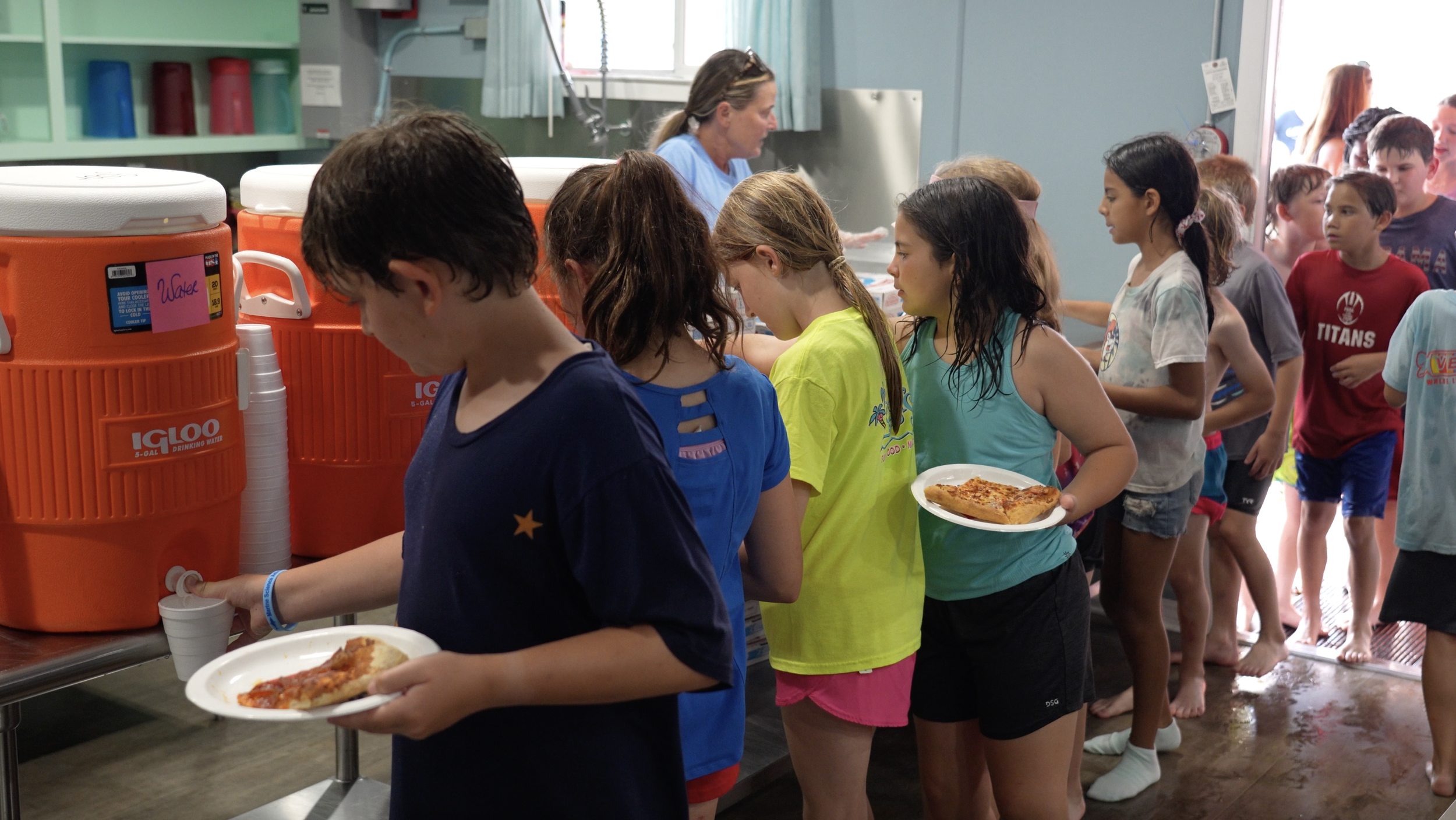
Set up meals buffet-style or as stations whenever possible. For large groups, this is significantly faster than plating individual meals and eliminates the bottleneck of everyone waiting on everyone else.
Keep a snack station stocked between meals. Granola bars, fruit, peanut butter and bread, a cooler of water and sports drinks are always a hit. In Gulf Shores heat, kids go through water faster than expected, and hungry players between games are cranky players.
Cleanup
Assign cleanup teams the same way you assign cooking rotations. Our commercial kitchen has double sinks and ample counter space, so post-meal cleanup is faster than people expect.
The trick experienced groups swear by: clean as you go while cooking, and post-meal cleanup takes 15 minutes instead of 45. A dirty kitchen piles up fast when you're cooking for 30; a kitchen that's been maintained throughout cooking is manageable for a small team in short order.
How Cooking Together Changes the Trip
Here's something our staff observe consistently with groups that cook their own meals: they bond differently.
It sounds almost too simple to be worth saying, but it's true.
“The group that makes taco night together, where someone’s stirring the meat, someone’s chopping tomatoes, and someone’s making a mess of the guacamole, ends up laughing at things that happened three days into the trip like they’ve been friends for years.”
The group that spends dinner at a restaurant sits in booths in clusters of four, stares at phones while waiting for food, and disperses quickly when the check comes. The group that makes taco night together, where someone's stirring the meat, someone's chopping tomatoes, and someone's making a mess of the guacamole, ends up laughing at things that happened three days into the trip like they've been friends for years.
Players who help cook take real pride in feeding their teammates. There's a sense of ownership and service in it that you can't manufacture with a team-building exercise. The kid who made the spaghetti sauce is invested in whether everyone liked it. That's no small thing.
Mealtime also becomes a natural window for coaches. You can use these moments for quiet check-ins with players, for announcements, for informal team talks that land better in a relaxed setting than they would in a formal meeting room.
This is exactly what we mean when we talk about groups putting down their phones and connecting face-to-face. The dinner table is where it happens most naturally and most often.
The Kitchen Is Ready — Just Bring Your Appetite
Our commercial kitchen is fully stocked and built specifically for group cooking. You don't need to bring equipment, improvise with undersized cookware, or figure out how to make a residential kitchen feed a huge group. All you need is a meal plan, a few willing volunteers, and a rotation schedule.
The meals are easier than you're imagining, the savings compared to a week of restaurant meals are real, and the bonding that happens around a shared meal is the part your team will still be talking about when they get home.
Ready to start planning your trip? Speak with a retreat specialist to reserve your dates.